Tool Calling vs Function Calling: Examining the API Contract Differences
Modern AI applications are evolving beyond simple prompt-and-response interactions. Language models can now retrieve information, query databases, invoke external APIs, and execute application operations. These interactions rely on structured communication between the model and the application.
Two commonly used approaches behind this capability are function calling and tool calling. While they may appear similar, the difference becomes more relevant when designing complex AI agents and production-ready systems.
Function Calling: A Direct Interface to Application Code
Function calling allows an LLM to select a predefined function and generate the arguments required to invoke it.
For example, an application might expose a weather function through a JSON schema:
{
"name": "get_weather",
"parameters": {
"type": "object",
"properties": {
"city": {
"type": "string"
}
},
"required": ["city"]
}
}
When a user asks about the weather in Chennai, the model can generate:
{
"name": "get_weather",
"arguments": {
"city": "Chennai"
}
}
The application receives this structured output, validates the arguments, executes the corresponding function, and returns the result to the model.
This approach works well for applications with clearly defined operations, such as customer lookups, payment calculations, and support ticket management.
Tool Calling: A Broader Capability Layer
Tool calling extends this concept by representing model-accessible capabilities as tools rather than focusing exclusively on individual functions.
A tool-oriented interface may use a structure like:
{
"type": "function",
"function": {
"name": "search_products",
"description": "Search available products",
"parameters": {
"type": "object",
"properties": {
"query": {
"type": "string"
}
}
}
}
}
The additional type layer provides a broader abstraction. Depending on the provider, tools can represent functions, retrieval capabilities, search operations, and other supported integrations.
This becomes useful when an AI agent needs to coordinate multiple capabilities within one workflow.
Where the Technical Complexity Appears
The challenge is not simply generating a valid tool-call JSON object. The application must also handle:
- Schema validation: Check required fields, data types, and permitted values.
- Authorization: Check if the user is capable of carrying out the desired action.
- Tool orchestration: Manage sequential and parallel calls, dependencies, and execution order.
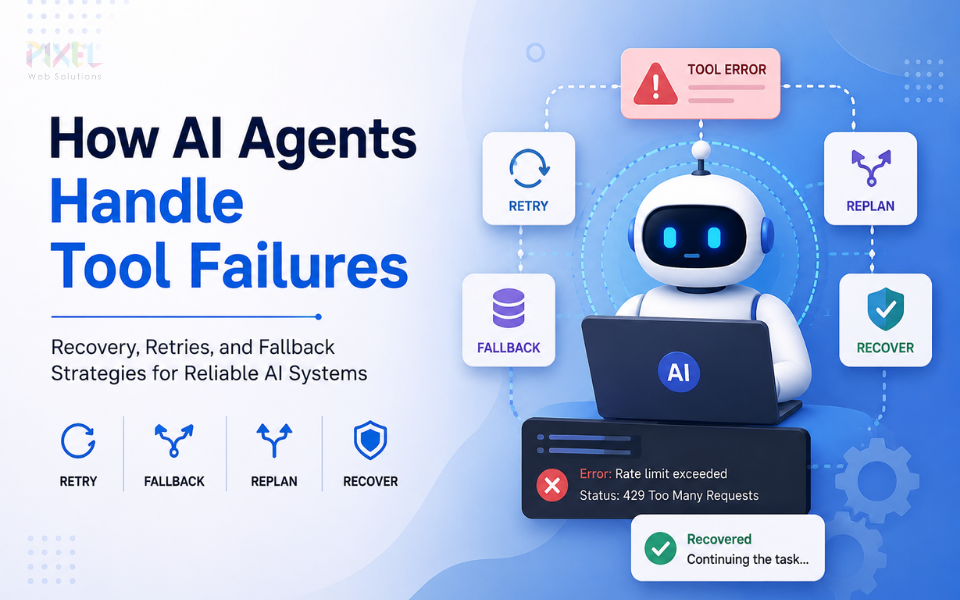
- Error handling: Convert API failures and timeouts into consistent model-readable responses.
- Result management: Return structured outputs that the model can process reliably.
For example, an HTTP 504 timeout should not leave an agent with an ambiguous response. The application can return a structured error containing a status, reason, and retryable flag.
Choosing the Right Abstraction
Function calling is suitable for straightforward application operations, while tool calling becomes more useful when an AI system interacts with multiple services and capabilities.
However, API structures and execution semantics vary between providers. Developers should examine the actual request schema, response format, tool-call identifiers, and supported execution behavior before choosing an implementation.
The real distinction is not just how an LLM calls an operation, but how the application defines, validates, and manages the contract between AI reasoning and external execution.
Read the full Article for a deeper breakdown : Tool Calling vs Function Calling: Where the API Contract Actually Diverges.
About the author
- CTO and technology professional with a focus on innovation, software engineering, and emerging technologies. I’m passionate about exploring new ideas, sharing industry insights, and understanding how technology can solve real-world challenges and create meaningful impact.
Comments
Join the discussionNo comments yet. Be the first to comment.